Art supplies is a subject that I could talk about for DAYS!
If you are a parent to a young artist or a teacher looking for suggestions on art supplies, I am here for you. I lead well over 100 workshops every year, to nearly 3000 students in grade 3, 6, and 8 classrooms. I know art supplies. Both as an artist myself and as a facilitator to others. I have come to understand what really works and what doesn't. So these are my top suggestions that have proven to yield exciting results time & time again.
Paper - My life revolves around it. It's expensive, but it's worth it. For art, I recommend at min 90gsm (grams per sq meter) but if you can step it up to 140gsm, please do. It can happily hold ALL the art mediums with room to spare. I order mine in bulk from Above Ground in 18x24’’ sheets and cut to size. If you are looking for an affordable sketchbook for a young artist, I will always suggest Cansons XL mixed media book.
Paint - Whether it is watercolour, acrylic or oils, each has their pros and cons and I use them based on the scenario. Age range, timing, is there a sink? A small group or a full class size? All factor in when it comes to choosing a medium for my lessons.
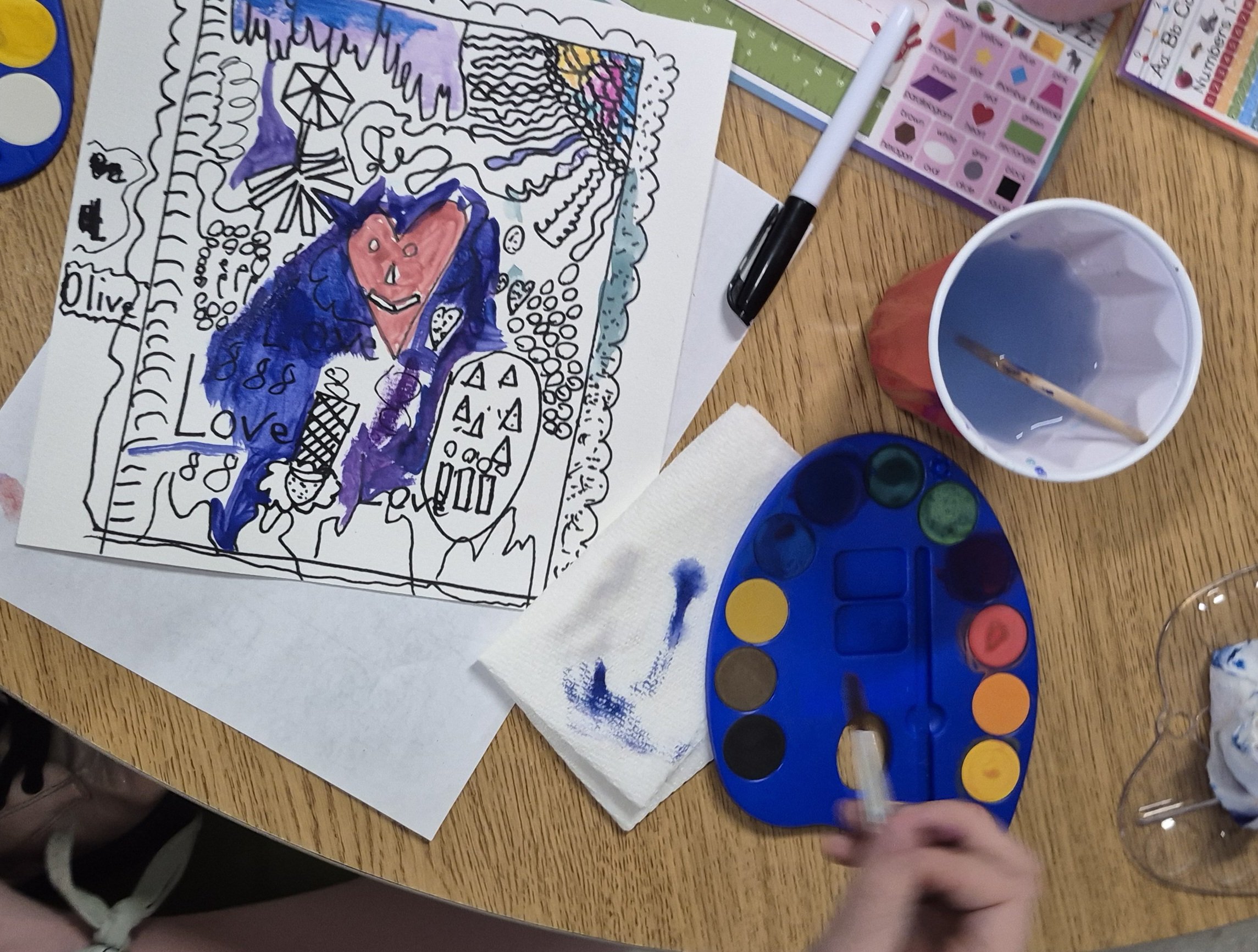
When it comes to watercolours, my recommendation for teachers would be this Spectrum pack that I'm currently using in my lessons. The pigments are great, the dry pucks last a while, and they travel well. If shipping and sourcing wasn't an issue, I'd have Primo palettes forever and always. If money or budgets weren't a thing, I'd carry Beam paints everywhere. For parents looking to support locally, hit up your nearest art supply store and grab either a dry puck palette or tubes which will go a long way and hold much better pigment.
As for acrylics, Tri-Art paints are my strongest suggestion. Art Noise is their beginner paint line that can be great for any classroom, followed by Rheotech that is a popular selection for student quality paint, up to their highest artist grade tubes of paint. Golden, is of course the golden standard for most acrylic artists, and for good reason. But they are an investment, so this would be for the dedicated students who want to see and feel the difference a good paint can make. Best to use acrylics when you have access to a sink and a solid amount of time to complete or revisit the project.
Oils are not for the classroom. I won't even bother diving into this medium. Oils are an investment both in time and $. If you have a young artist interested in oil painting, I sugguest you connect with me or another artist who is willing to teach in private setting over the course of a few lessons. They can be tricky, messy, stinky and do not travel well.
Brushes - Are a huuuggee personal preference. Ask any artist what brush(es) they prefer and you'll get a different answer from every one. Round, flat, filbert. Short, long handles, synthetic or hog hair. One brand over another will give a whole different feel. Do I also rely on some from teh dollar store? Yes. The best brush depends on medium, on budget, on quantity and of course, quality. For my classroom workshops I absolutely adore these clear handle brushes from Spectrum, they can take a beating and still keep their form. They hold a lot of water and paint, and are a great size for all of my students. For the art home artists, this Zen variety pack from Royal-Langnickle will always be reliable.
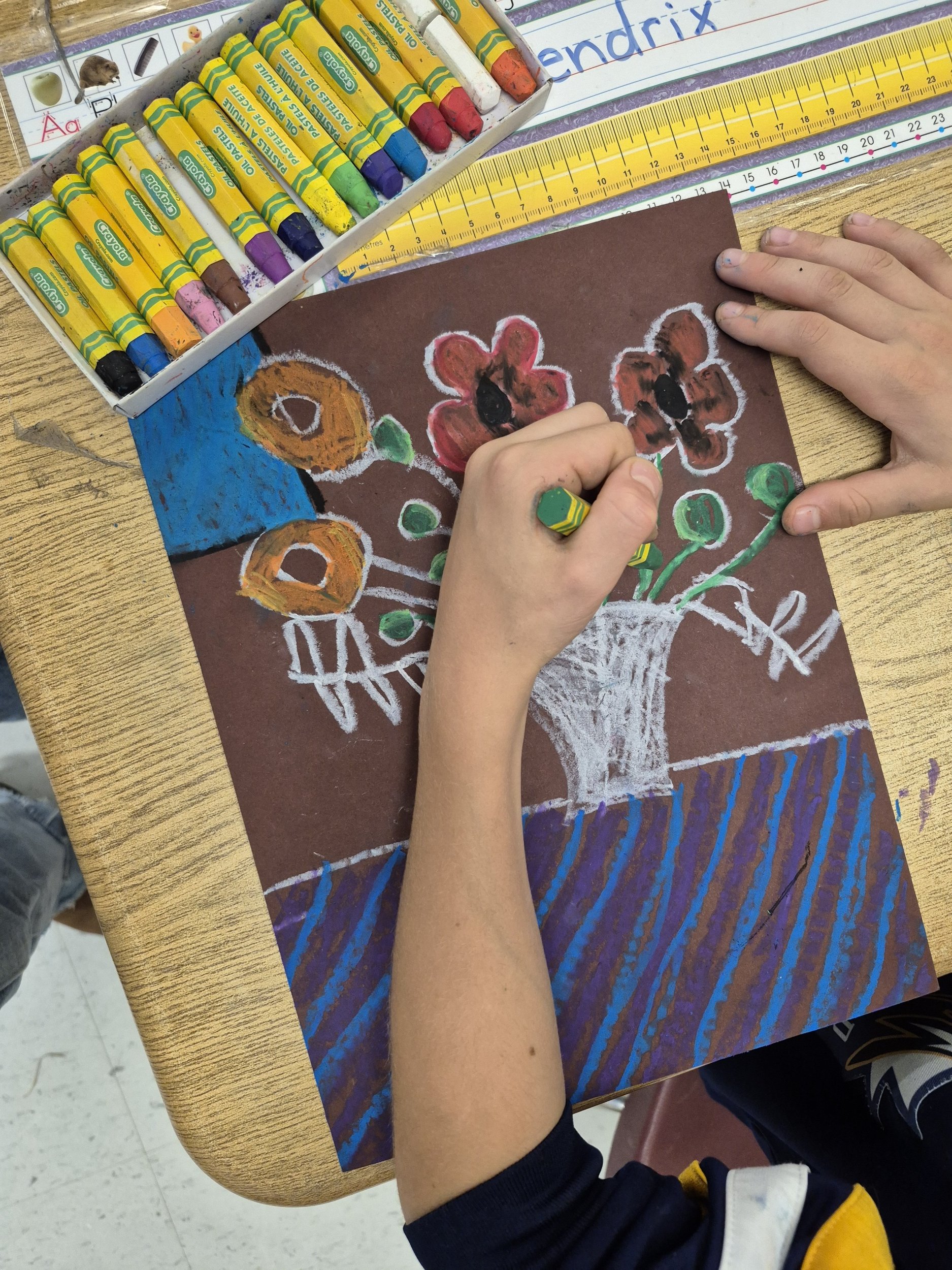
Pastels - I have tried MANY different brands. And I continue to come back to this pack of Crayola oil pastels. I have full confidence in these pastels. For the pigment load, the colour variety, the size and the price! A bargain in comparison to others I've used with students. They are suitable for the little gr 3 hands and juicy enough for the rich textures I look for from gr 8 students. They can take a beating and hold their own beautifully.
Markers - are a popular item in my tool kit. I cruise through permanent markers throughout the school year. And in recent years I have happily ditched the Sharpie brand and now opt for the Amazon basics. They last way longer, hold their shape far better, and don't carry that marker smell that I find with Sharpies. And the pricing is way more affordable. Once they run dry, I collect them all in a bag and drop them at Staples to be recycled.
Magazines & scrapbook paper - I have a box full of odds and sods of patterned paper and collage bits that I am constantly cutting from magazines I’ve kept or thrifted. Having this collection on hand gives me the freedom to jump into a collage lesson any day I feel like it. We all love a moment to simply cut and paste and students have a blast sifting through the options. It can be geared to one subject, a self portrait, or a vision board of sorts. Highly recommend for all ages.
Other things to consider;
If I don't have paper towels on hand, it's chaos. I encourage artists to clean their brushes in between colours to prevent a muddy mess within their work. Keep paint water clean as often as you can. The younger they are the quicker the water becomes brown and that leads to dull or dark results on their paper. Cleaner brushes = brighter artwork.
Pass on the semi-moist paint palettes. From my experience, they are awful. They look great on the shelf but once you open them up, they can become a hot mess real quick. The pigments can be vibrant but they are short lived and do not travel well. Even if only for the artist at home, see my above suggestions over these any day.
Cheap materials will give you cheap results. Along with an awkward experience that leaves artists feeling defeated more often than excited. Don't get me wrong, the Dollar store can work in a pinch. They offer an affordable price point, sure. But you truly get what you pay for. Dull pigments, brushes that shed, paper that warps, and markers that dry out so fast. I know that when any of us face too much friction and frustration with anything, it deters us from going back and trying again. That applies to art making. If we invest in the good stuff from the start, we save money, we avoid breakdowns, we have a better experience, we see stronger results and we keep the garbage supplies from ending up in landfills.
Where I buy most of my art supplies from:
Spectrum - is mainly for the teachers who are able to order from this site or the facilitators who need to order decent supplies in bulk. Canadian and quick enough to ship. Sometimes, they can be low on certain stock.
Above Ground Art Supplies - is my suggestion for bulk paper orders and higher quality supplies for the artists at home. They ship SO fast and have great customer service and incredible storefronts in the GTA.
Deserre’s - My go to store as an artist for my own supplies. Canadian company with incredibly fast shipping and reasonable pricing. Very fun items to explore in store.
Amazon - I’m not linking the multi billion $ corp. I trust you can find that one.
Local art stores - If you are in the Simcoe County area, you know we have a limited selection of physical stores to peruse. But if you are in the Thornbury area, Birch & Benjamin is a perfect place to stop (If I could be a paint store, I would be this one). Meaford has the beautiful Robert’s Studio to support and find stellar supplies and gifts. Up in Penetanguishen you can find Marlynn's Hamster on the main street with all the brands artists love. Linkes has a small space in the back with select brands and materials in Stayner. And The Drawing House in Barrie is loaded with artist quality options and a range of workshops and lessons available.
Thrift & FBMP - Sometimes I'll get lucky with books and magazines at the local thrift. Or scrap material and yarn for certain projects. Wooden frames and easels come available often. Marketplace will offer pretty good supply hauls from artists looking to offload paints or canvases they no longer want. But in full transparency, be VERY CAREFUL with how much you collect vs how much you USE! I know from experience and expense, that it costs money to store an obnoxious amount of paint and supplies. So purchase accordingly.